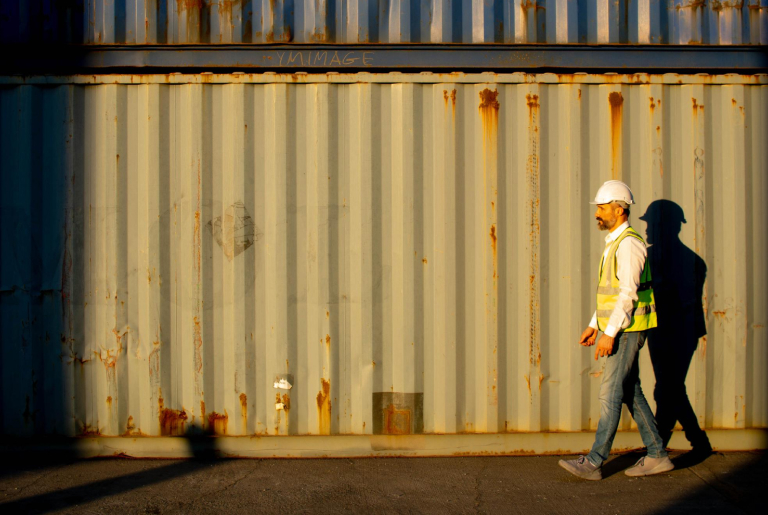
On-site storage containers provide businesses with a straightforward solution for additional space right where they need it. The process involves three main steps: delivery of your purchased container to your location, strategic placement on your property, and optional pickup if you ever need to relocate or remove it. For commercial and industrial operations throughout New Jersey, understanding how this process works helps you plan effectively and avoid common pitfalls.
What Happens During Storage Container Delivery?
When you purchase a storage container from Jake Containers, delivery begins with careful logistics planning. Our team coordinates with you to schedule a delivery window that minimizes disruption to your business operations. When you choose Jake, we can often deliver your container(s) within 48 hours, in comparison to up to 10 business days with other container companies.
The delivery itself uses a specialized flatbed truck equipped with a tilting mechanism or a truck with a built-in crane system. For standard 20-foot and 40-foot containers, the flatbed tilt method is most common. The driver positions the truck, tilts the bed, and slides the container off onto your prepared surface. This process typically takes around 30 minutes once the truck arrives, assuming your site is properly prepared.
What your delivery team needs from you:
Your property must have clear access for a large truck—typically requiring 14 feet of width and 16 feet of overhead clearance. The driver needs approximately 100-120 feet of straight-line clearance for a 40-foot container delivery (60-80 feet for a 20-foot unit). Overhead obstacles like power lines, tree branches, or building overhangs can prevent safe delivery.
How Do You Prepare Your Site for Container Placement?
Proper site preparation determines whether your container remains level, accessible, and damage-free over its lifetime. For commercial and industrial applications, this preparation is crucial; a poorly placed container can affect your operations, void warranties, and create safety hazards.
Ground surface requirements:
Your container needs a level, stable foundation that can support substantial weight. A fully loaded 40-foot container can weigh up to 67,200 pounds. Asphalt, concrete, and compacted gravel all work well. Grass, dirt, or soft ground will cause settling, potentially making doors difficult to open and creating water intrusion points.
Many Jersey City manufacturing facilities choose to pour concrete pads, which provide the most stable long-term solution. A 4-inch thick concrete pad with proper drainage works for most applications. Alternatively, compacted crushed stone (at least 4-6 inches deep) costs less and still provides adequate support.
Clearance and accessibility planning:
Beyond delivery access, consider operational clearance. Container doors require space to swing fully open—budget for at least 8-9 feet of clearance behind a container for comfortable access. If you’re using your container for parts storage or equipment housing, you’ll want even more room for loading equipment like forklifts or pallet jacks.
For multi-container installations common at construction sites or industrial yards, plan pathways between units. A manufacturing facility in Ridgefield Park might arrange containers in rows with 12-15 feet between units for forklift access, creating an organized outdoor storage system that integrates with their existing warehouse operations.
What are Container Placement Options and Methods?
Placement flexibility is one reason businesses choose to purchase containers rather than build permanent structures. Jake Containers works with you to position your unit exactly where it benefits your operation most.
Standard ground-level placement:
Most commercial applications use simple ground-level placement. The delivery driver uses the tilt-bed method to slide the container onto your prepared surface. You can provide specific positioning guidance like placing it parallel to a building or a certain amount of feet from your loading dock, and experienced drivers can typically achieve accuracy within 6-12 inches.
This method works perfectly for warehouses needing overflow inventory storage, construction companies organizing tools and materials, or retail businesses requiring seasonal stock space. A Jersey City distribution center might place containers near loading areas to create immediate access to high-turnover products.
Modifications for specific uses:
When purchasing containers for specialized commercial applications, consider modifications before delivery. Jake Containers can customize your container with shelving systems, lighting, ventilation, or climate control. A pharmaceutical distributor might purchase a refrigerated container with electrical hookups, while a construction company might want a container modified with tool racks and a side access door.
These modifications should be completed before delivery, as they’re easier and less expensive to install in a controlled workshop environment. Discuss your operational needs upfront so your container arrives ready for immediate use.
How Long Does the Entire Process Take?
From purchase decision to having a functional storage container on your property, the timeline varies based on several factors. For businesses needing quick solutions, understanding these timeframes helps with project planning.
Standard purchase and delivery timeline:
For in-stock standard containers (20-foot or 40-foot units in good condition), expect delivery in as little as 48 hours in the tri-state area. If you need site preparation work, add that time in and schedule your delivery accordingly.
Custom modifications extend the timeline, and depend on how involved your modifications are. Simple additions like shelving or basic electrical work might take a few days, whereas complex modifications like converting a container into a mobile office, adding HVAC systems, or installing specialized equipment storage can take a few weeks depending on scope.
Rental options for shorter-term needs:
While this article focuses primarily on container purchases, Jake Containers also offers rentals for businesses in nearby areas like Jersey City and Newark that need temporary solutions. Rental deliveries follow the same process but provide flexibility for seasonal operations, temporary project sites, or businesses testing container storage before committing to a purchase.
Rental timelines are typically shorter since containers remain in standard configuration without custom modifications. This makes rentals ideal for construction projects with defined completion dates or businesses handling temporary inventory surges.
What About Pickup and Relocation Services?
One advantage of owning a storage container is mobility. Unlike permanent construction, containers can be relocated as your business needs change.
When you need container pickup:
Perhaps you’re moving operations to a new facility, consolidating locations, or simply no longer need the storage space. Jake Containers provides pickup services throughout New Jersey and the tri-state area. The process reverses the delivery: a flatbed truck arrives, loads your container, and transports it to your new location or facility.
Pickup requires the same clearances as delivery. The truck needs access, and the area around your container must be clear of obstacles. If your container has been on-site for years, check that tree growth, fence installations, or other changes haven’t blocked removal access.
Relocation between business locations:
Many growing businesses purchase containers initially for one location, then relocate them to new facilities as they expand. A manufacturing company might buy containers for their Newark plant, then move them to a new Ridgefield Park facility when they upgrade. This flexibility makes purchasing containers more cost-effective than you might expect, making them movable assets rather than abandoned investments. Relocation costs depend on distance and accessibility at both locations involved.
How Do Weather and Seasonal Factors Affect Container Services?
Our local New Jersey weather creates specific considerations for container delivery, placement, and long-term use.
Winter deliveries:
Snow and ice can complicate delivery logistics. While Jake Containers operates year-round, winter deliveries require clear, accessible paths and stable ground conditions. Frozen ground actually provides excellent support for container placement, but snow must be cleared from delivery paths and placement areas. Additionally, ensure this area is compact and stable under normal conditions, as dirt areas can easily become uneven in wintery conditions.
Many Jersey City businesses schedule container purchases for early fall or late spring to avoid winter complications while still addressing storage needs before peak seasons.
Ground conditions and drainage:
New Jersey’s rainfall and occasional flooding requires attention to drainage when placing containers. Even on concrete or asphalt, position containers with slight rear elevation (containers naturally have this due to their rail structure) to prevent water pooling near doors. On gravel surfaces, ensure proper grading directs water away from your container.
Commercial facilities often install French drains or gravel trenches around containers to manage water flow, especially for long-term installations storing sensitive equipment or inventory.
Frequently Asked Questions
You need at least 14 feet of width, 16 feet of overhead clearance, and 60-80 feet of straight-line space for a 20-foot container (100-120 feet for a 40-foot container). The delivery truck is approximately 50-60 feet long and needs maneuvering room. If your site has access restrictions, ask about crane delivery options that can navigate tighter spaces.
Containers can be placed on unpaved surfaces, but they require proper preparation. Soft ground like grass or dirt will cause settling and create unlevel conditions. At minimum, use compacted gravel at least 4-6 inches deep. For commercial and industrial applications where you’ll access the container frequently with loaded equipment, concrete or asphalt provides the most reliable long-term surface.
Purchasing a container makes sense for long-term needs (over 12-18 months), permanent fixture requirements, or situations where you want to modify the container extensively. Buying means no ongoing monthly payments, and the container becomes a business asset. Renting works better for temporary projects, seasonal needs, or when you want flexibility without capital expenditure. Jake Containers offers rentals in nearby areas like Jersey City and Newark for businesses needing shorter-term solutions.
Standard container delivery typically happens within 48 hours for the nearby New Jersey areas, including Newark, Jersey City, and Ridgefield Park. This timeline assumes you have site preparation complete and choose an in-stock standard container. Custom modifications add time: simple changes might add a few days, while extensive modifications can take a few weeks. For urgent needs, contact Jake Containers to see what delivery options we can offer your business.
Permit requirements vary by municipality across New Jersey. Most commercial and industrial zones allow temporary storage containers without permits, but permanent container placements often require approval. Some jurisdictions require setback distances from property lines, while others have duration limits for “temporary” containers. Jake Containers recommends checking with your local zoning office before delivery, as every area is different. We can provide documentation about container specifications that zoning boards typically request.